|

|
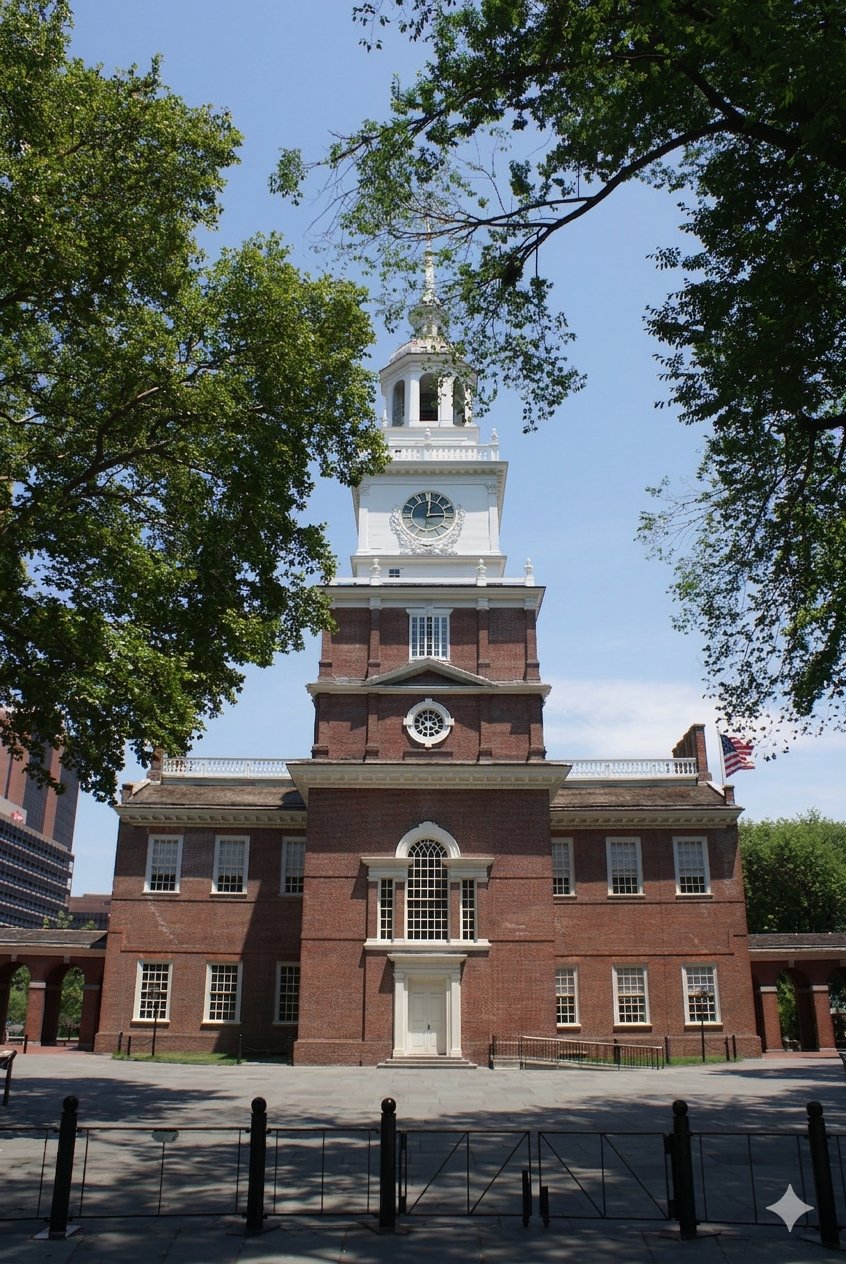
A rear view of Independence Hall
|
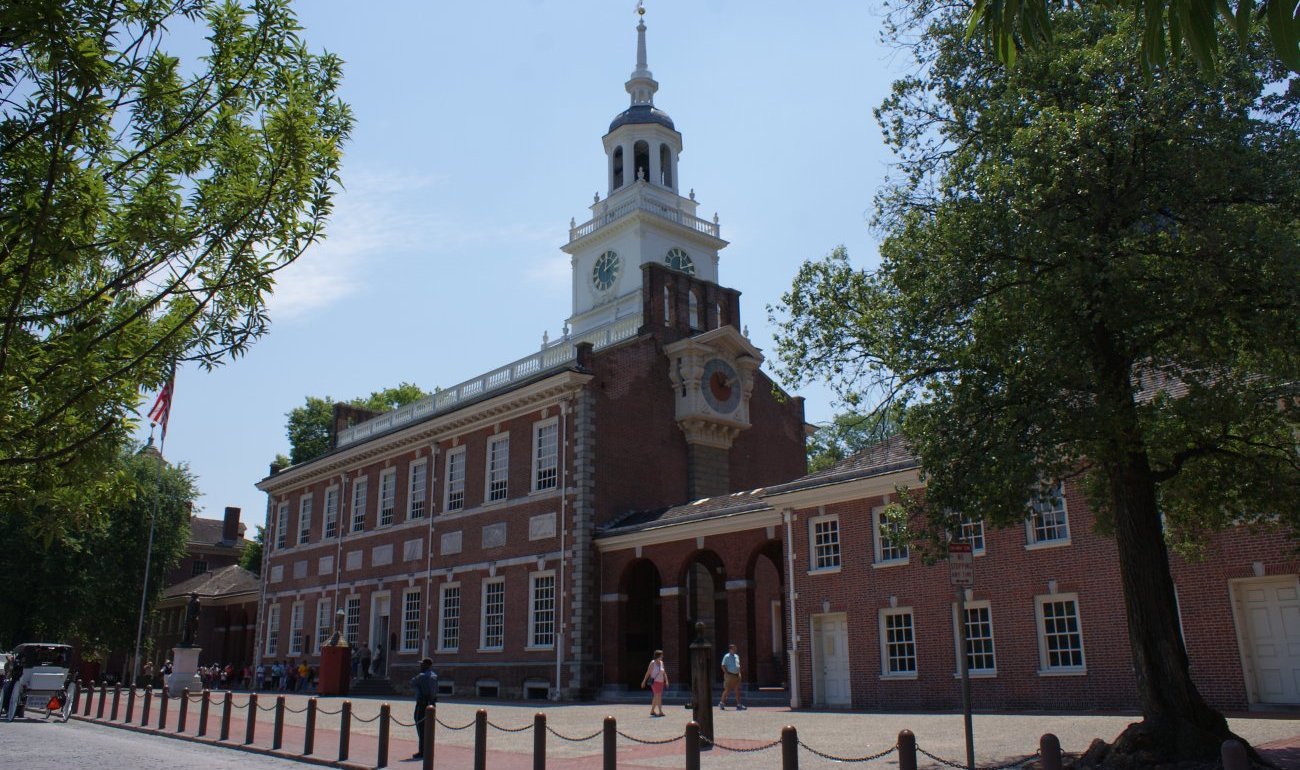
INDEPENDENCE HALL
520 Chestnut Street
Philadelphia, PA 19106
Google Maps location
FREE ADMISSION + $1 administrative fee (but you'll need a timed ticket)
This site is part of INDEPENDENCE NATIONAL HISTORICAL PARK. Check their website for the most up-to-date information.
Independence Hall, formerly the Pennsylvania State House, was built in 1733. It is the building in which the two most important founding documents of the United States -- the Declaration of Independence (1776) and the United States Constitution (1787) -- were debated, voted upon, and approved. In essence, it is the birthplace of the United States of America as a sovereign nation.
In May, 1775, following the battles of Lexington and Concord, in Massachusetts, the Second Continental Congress, made up of delegates from all 13 original colonies, began meeting here. Accepting the fact that a rebellion against British rule had begun, they created a Continental Army, appointed George Washington of Virginia to lead it, and approved the issuance of Continental currency to pay the expenses of the war. On July 5, 1775, the Continental Congress issued what's known as the "Olive Branch Petition," which was sent to the King of England, George III, imploring the King to make peace between Great Britain and its North American colonies. The very next day (July 6, 1775), they issued the "Declaration of the Causes and Necessity of Taking Up Arms." which in essence, blamed the British Parliament for commencement of hostilities.
After the King had rejected Congress's pleas for peace, the Continental Congress began thinking about the issue of independence, which was not initially one of the war's aims. In January 1776, a popular pamphlet entitled Common Sense, authored by a recent English arrival named Thomas Paine, made a compelling case for independence. Finally, on June 7, 1776, a Virginia delegate, Richard Henry Lee, introduced a resolution calling for independence. It read: “Resolved, That these United Colonies are, and of right ought to be, free and independent States, that they are absolved from all allegiance to the British Crown, and that all political connection between them and the State of Great Britain is, and ought to be, totally dissolved.”
As the Continental Congress debated the issue of Independence, a committee consisting of Ben Franklin of Pennsylvania, John Adams of Massachusetts, Thomas Jefferson of Virginia, Roger Sherman of Connecticut, and Robert Livingston of New York, were charged with drafting a Declaration of Independence, in the event that the delegates unanimously approved Lee's resolution, which they did on July 2, 1776. Two days later, the committee's declaration, authored almost entirely by Jefferson, was approved, which is why July 4 is now celebrated as Independence Day. The delegates did not sign it that day, however. After a finished copy was drawn up by a scribe, signing commenced on August 2, 1776.
|
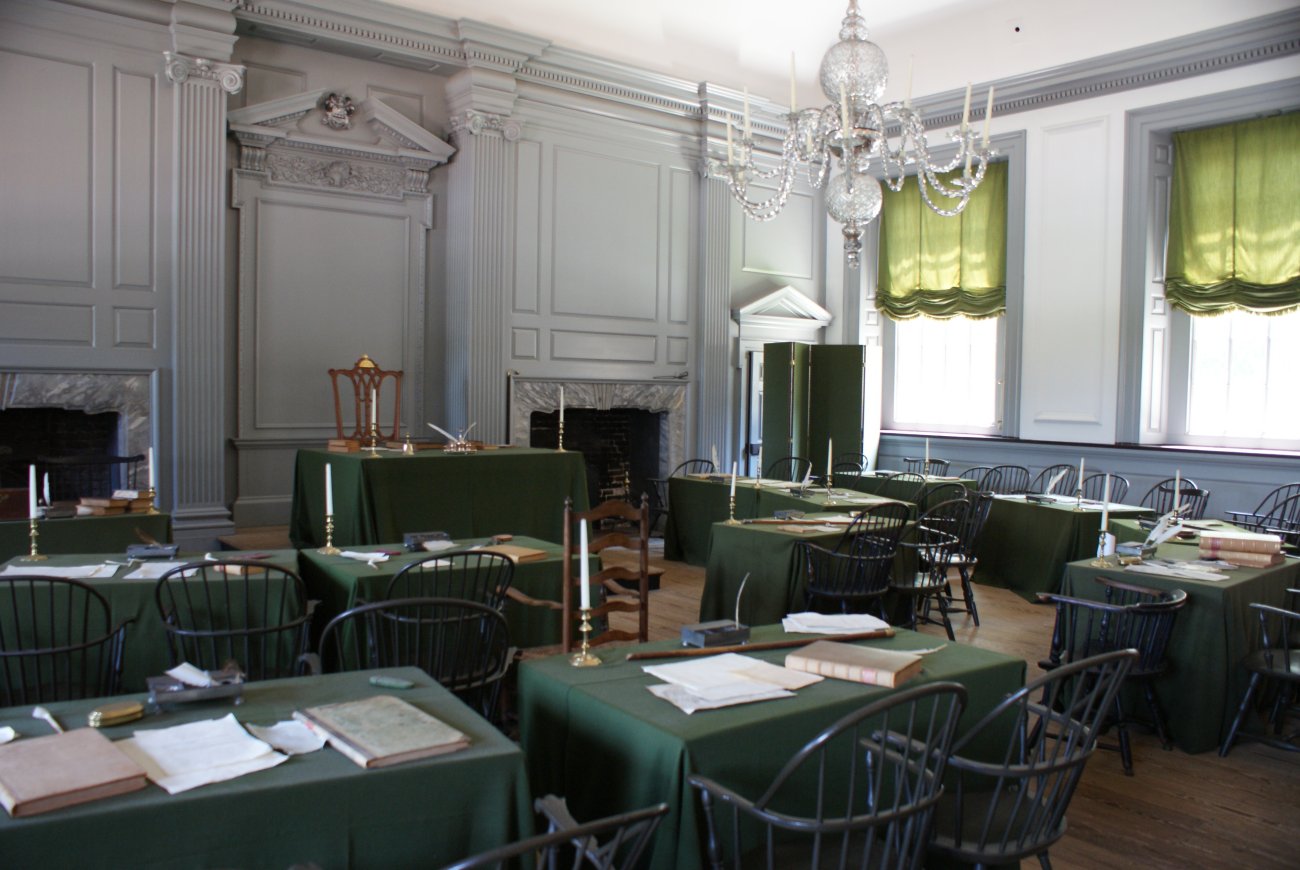
Pennsylvania Supreme Court Room, inside Independence Hall
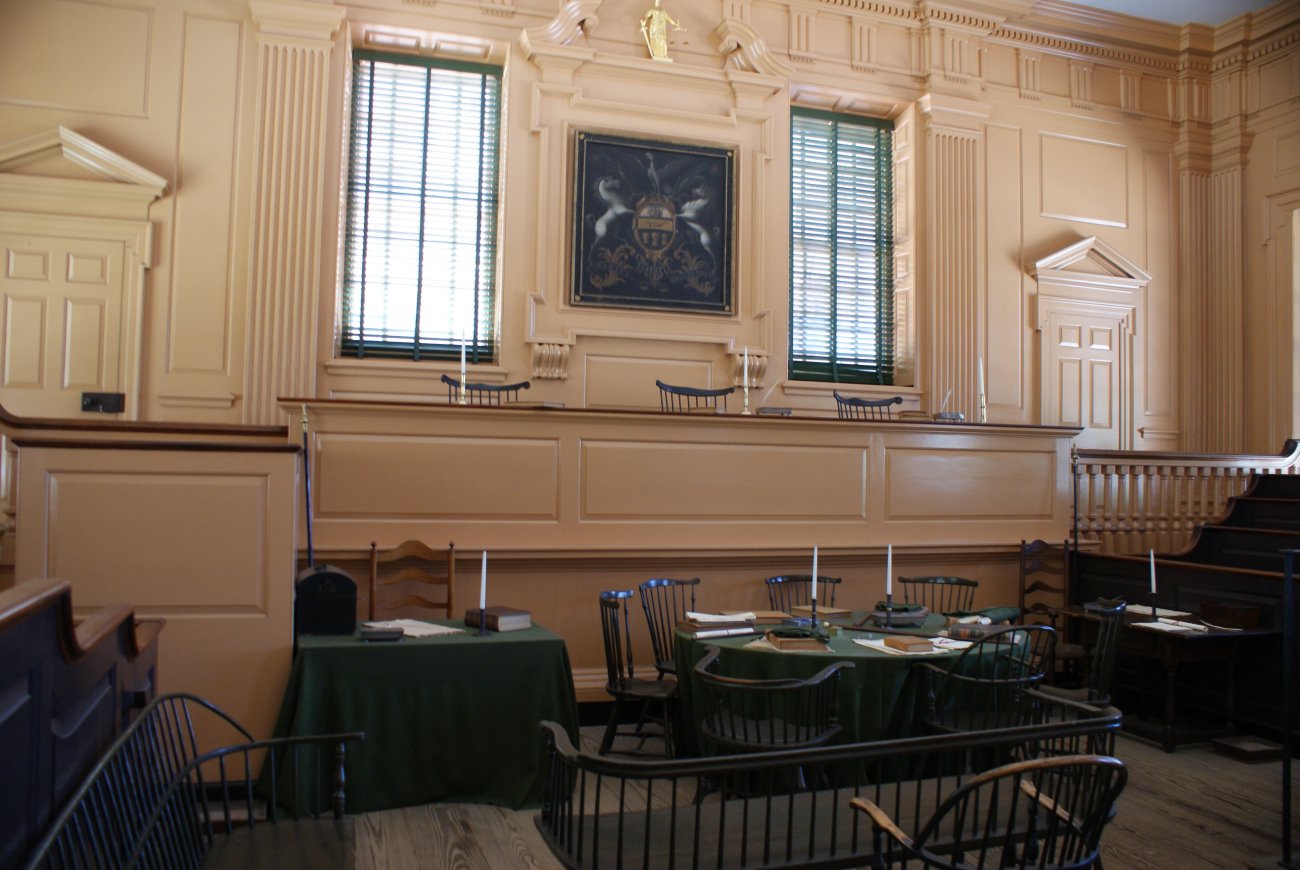
The room where the Declaration of Independence and the U.S. Constitution were "born"
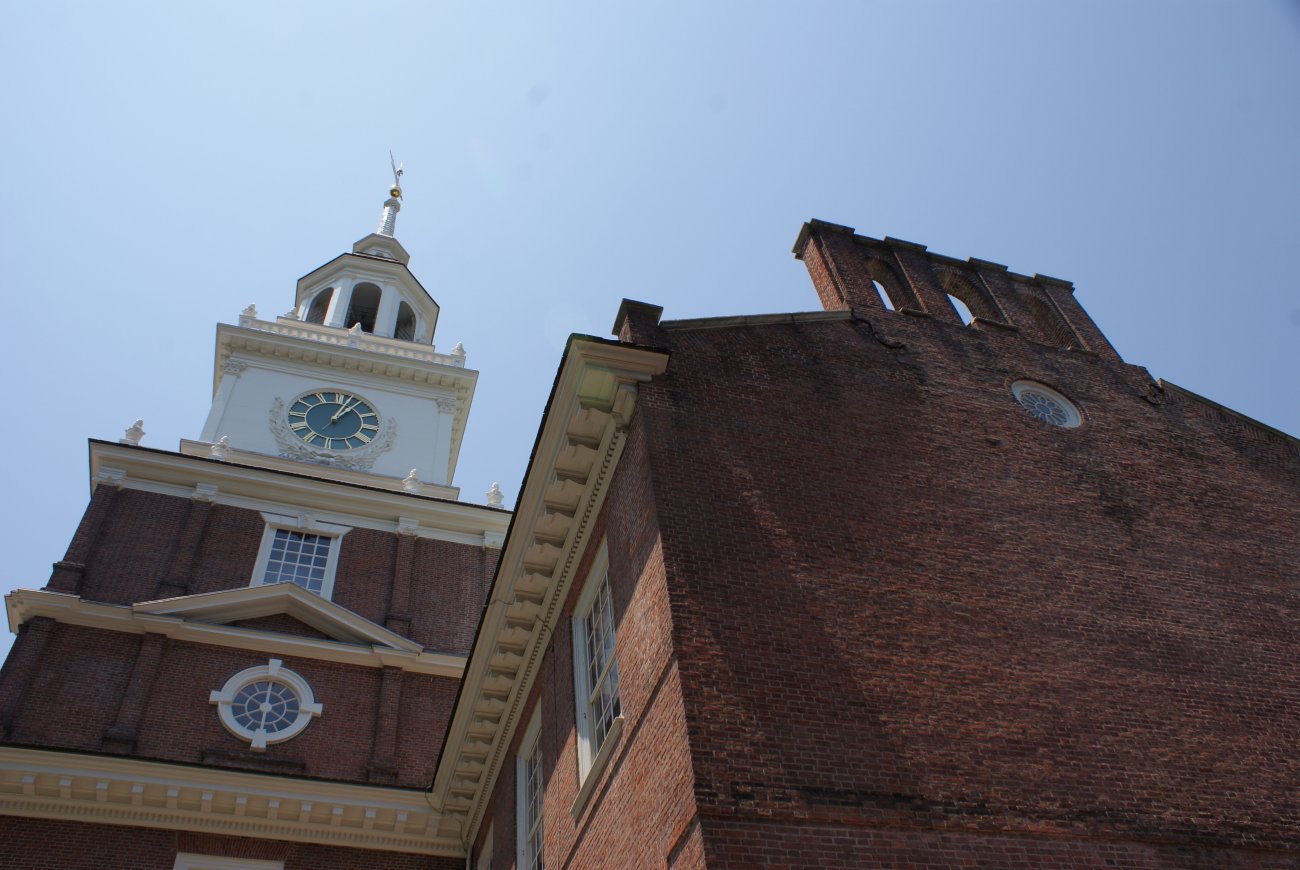
East side of Independence Hall, looking up
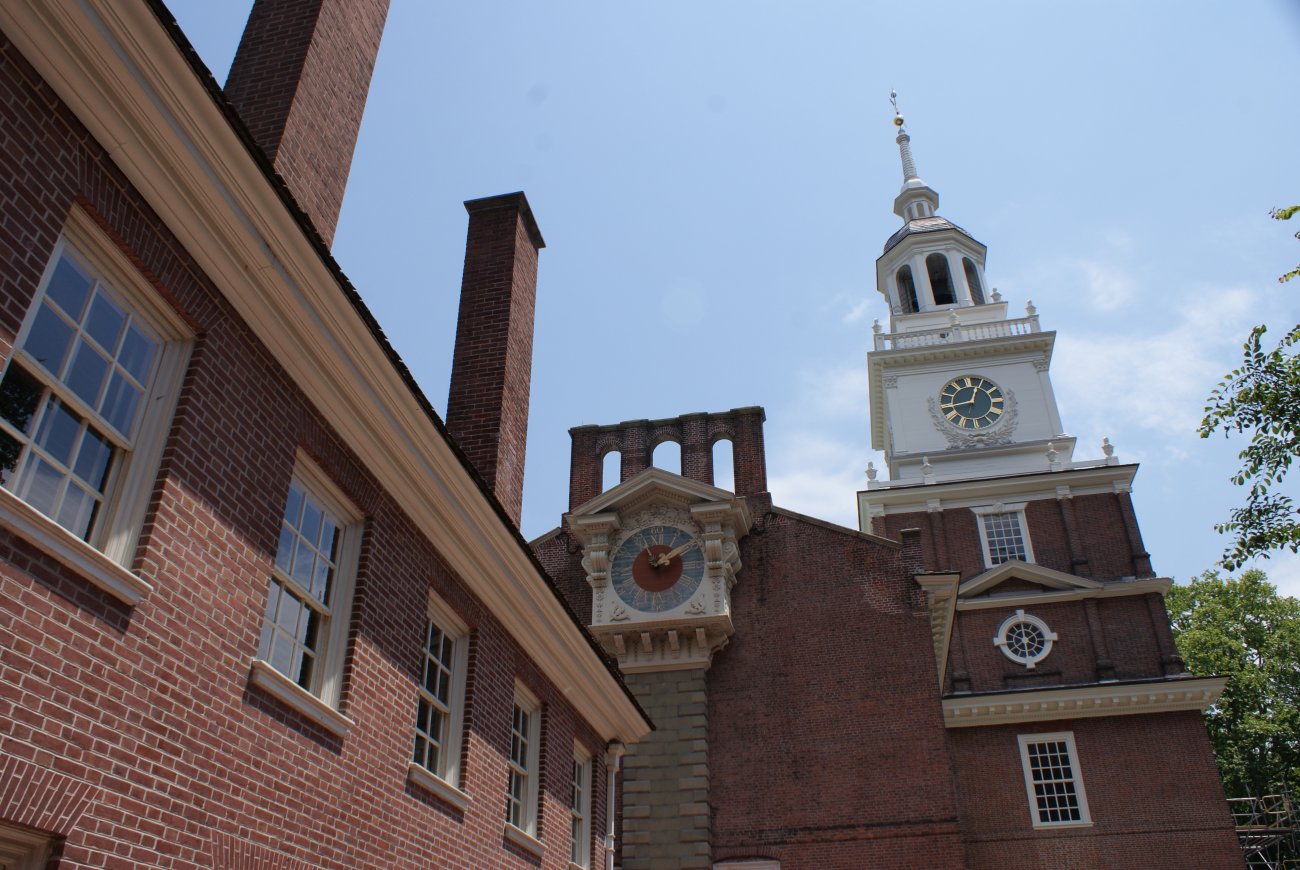
West side of Independence Hall, looking up
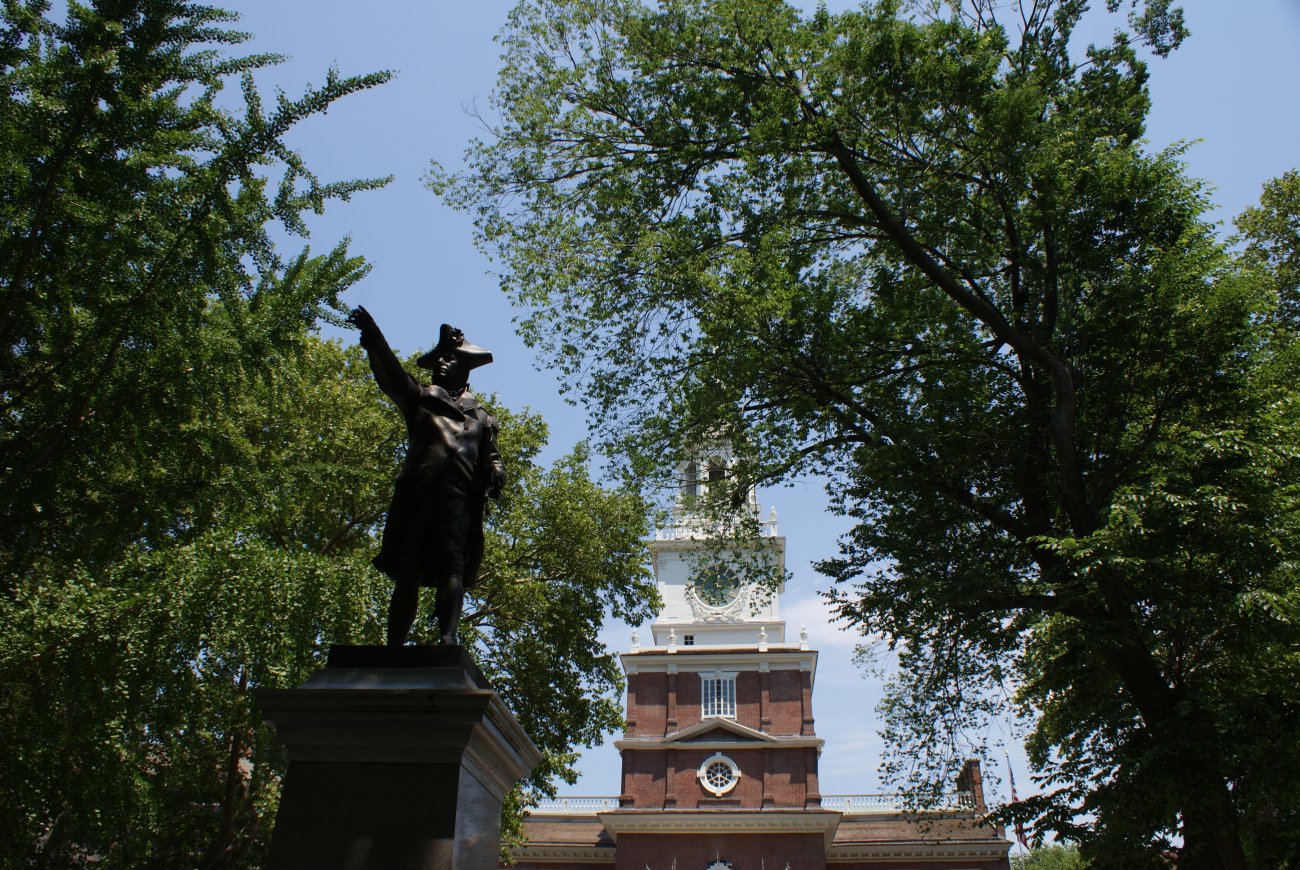
Statue of Commodore John Barry, "Father of the United States Navy," at rear of Independence Hall
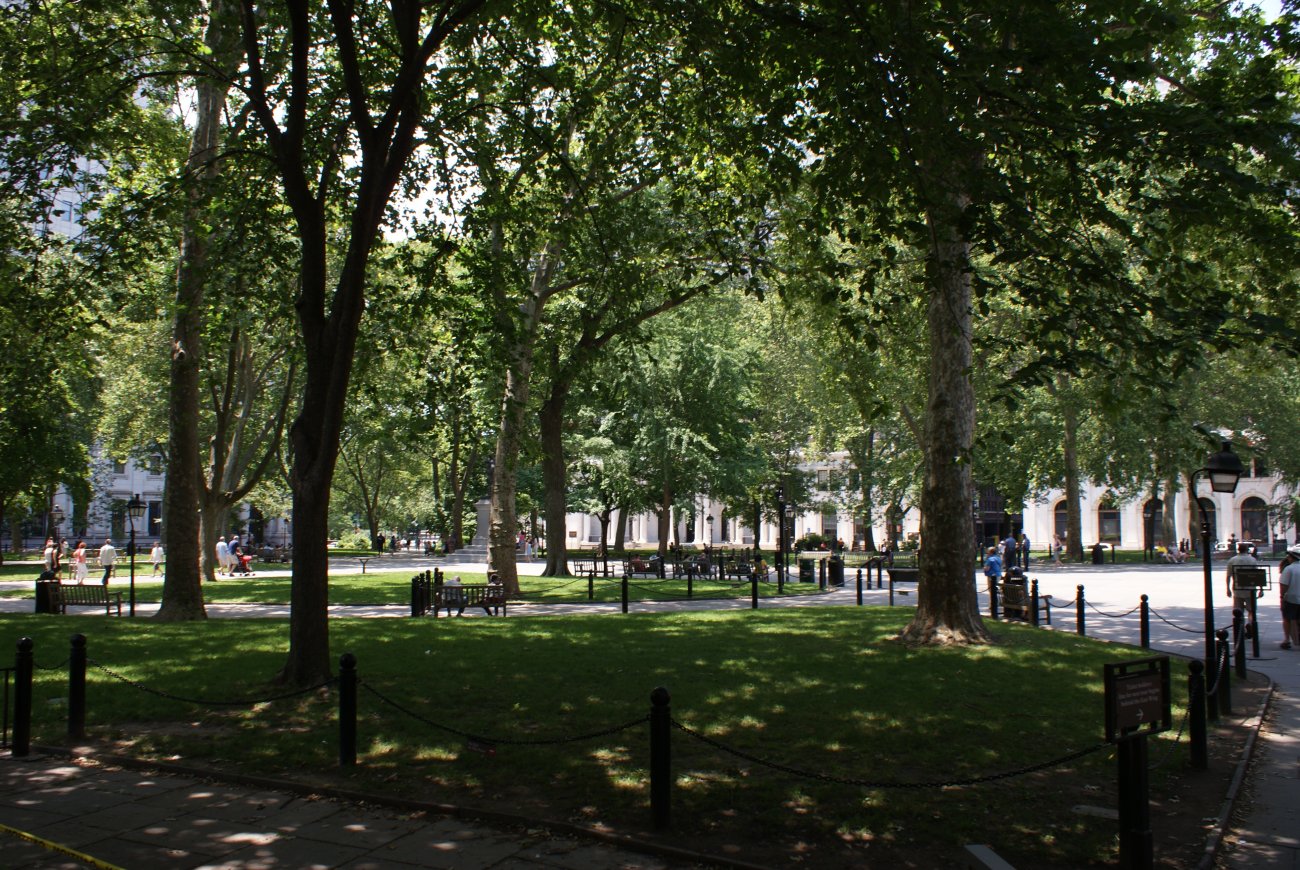
Independence Square, behind Independence Hall
|
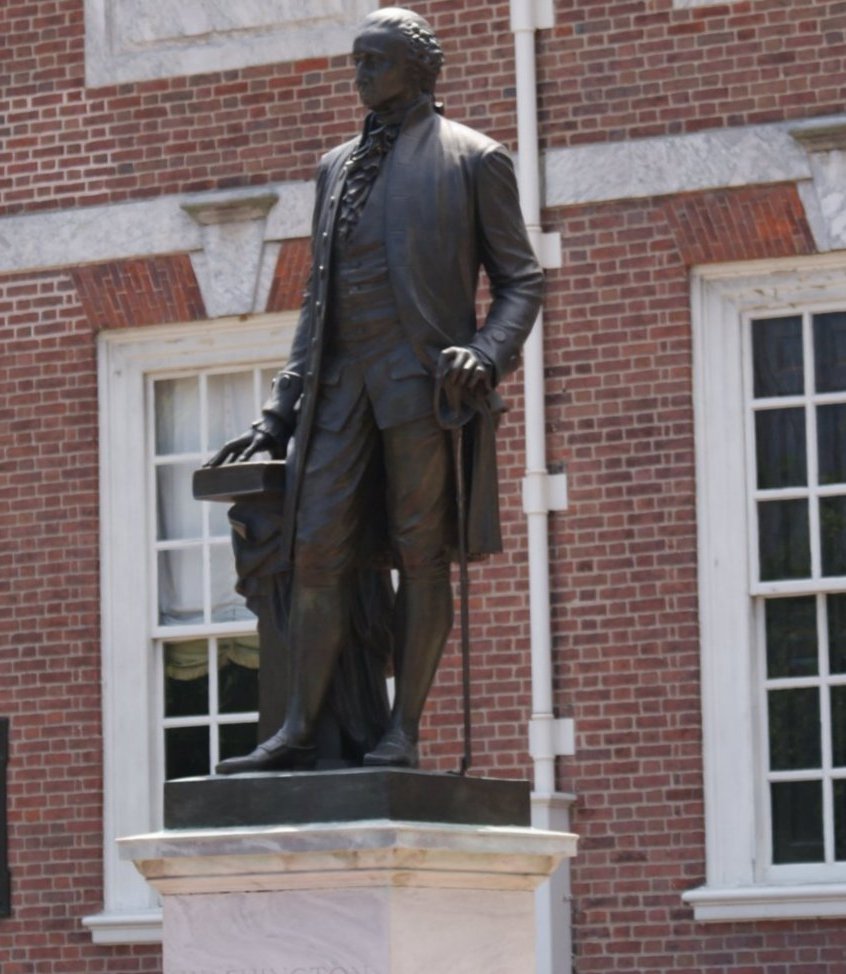
Statue of General George Washington, First President of the United States, outside Independence Hall
|
During the American Revolution, the Continental Congress, which was the de facto government of the United States, continued to meet here, except during a period of time when the British army occupied Philadelphia.
Following the war, when the government operated under the Articles of Confederation (adopted 1781), Congress, which was then the only branch of the United States government, regularly met here.
Starting on May 25, 1787, a Constitutional Convention, made up of 55 delegates from every state except Rhode Island, was held here, with George Washington as its presiding officer. A delegate from Virginia, then-future-President James Madison, played a significant role in shaping the document that emerged. Finally, after more than 3 months of debate and compromise, the United States Constitution was approved and signed by the delegates on Sept. 17, 1787.
However, before the Constitution could take effect, nine states had to ratify it. By summer 1788, after the ninth state (New Hampshire) ratified the Constitution, it became effective and in 1789, the first United States government under the Constiutiton began meeting in New York City, where George Washington was inaugurated at the country's first President.
Some people claim that the Founding Fathers established a Christian Nation based on Biblical values. This is not true. Not only is there no mention of representative democracies in the Bible, the Constitution itself provides evidence the Founders established a secular national government with church and state separated. For instance:
- Federal Constitution has no religious references (no mention of God, Jesus, Christianity, or any other religion)
- No religious test “of any kind” is required to hold federal office. (Article VI, third paragraph).
- The words “So help me God” are not a part of the presidential oath, nor is it required to take the oath with hand on Bible. (Article II, Section 1, eighth paragraph).
- First amendment to the Constitution provides for government neutrality toward religion (neither supporting religion nor opposing freedom to worship).
|
In addition to the above, a clause included in the 1797 Treaty of Tripoli, made during the presidency of George Washington, and ratified unanimously by the United States Senate during the presidency of John Adams, states unequivocally: "the Government of the United States of America is not in any sense founded on the Christian religion."
Furthermore, the Great Seal of the United States, adopted in 1789, contains no cross or other religious symbolism and the national motto chosen was not "In God We Trust," but rather, "E Pluribus Unum" (Latin for "Out of many, one"). "In God We Trust" was not adopted as an additional motto until the 1955, during the Cold War, primarily to distinguish the United States from the Soviet Union.
Comments or questions?

Send email to: docbutler@yahoo.com
This website copyright © 2026 by Steven R. Butler, Ph.D. All rights reserved.
|